Wearing a saree for the first time can feel exciting. The beautiful drape, elegant silhouette, and traditional appeal make it one of the most iconic South Asian outfits.
However, if you have never worn one before, you may wonder which saree fabric is easiest to manage, how to choose the right length, and how to create a neat drape.
The good news is that you do not need years of experience to wear a saree confidently.
With the right fabric and a few simple techniques, beginners can enjoy the beauty of saree fashion.
1. Start with Lightweight Georgette Sarees
Georgette is a popular option for beginners because it is relatively lightweight and creates a graceful drape.
It is suitable for parties, family gatherings, and special occasions.
Choose simple designs without excessive embellishments when learning to drape.
2. Try Chiffon Sarees
Chiffon sarees create a soft, flowing appearance.
They are comfortable for many occasions, although the slippery texture may require careful pleating and pinning.
A simple chiffon saree is a lovely choice for someone who wants a lightweight outfit.
3. Explore Lightweight Cotton Sarees
Cotton sarees can be a good choice for everyday practice.
They generally provide more structure than very lightweight fabrics and are suitable for casual occasions.
However, thicker cotton varieties may feel heavier and require more careful pleating.
4. Choose a Manageable Saree Design
When shopping for your first saree, consider these details:
-
Lightweight fabric.
-
Comfortable length.
-
Simple borders.
-
Minimal embellishments.
-
Clear blouse-piece information.
-
Easy-care instructions.
Avoid choosing a very heavy or heavily embellished saree for your first attempt.
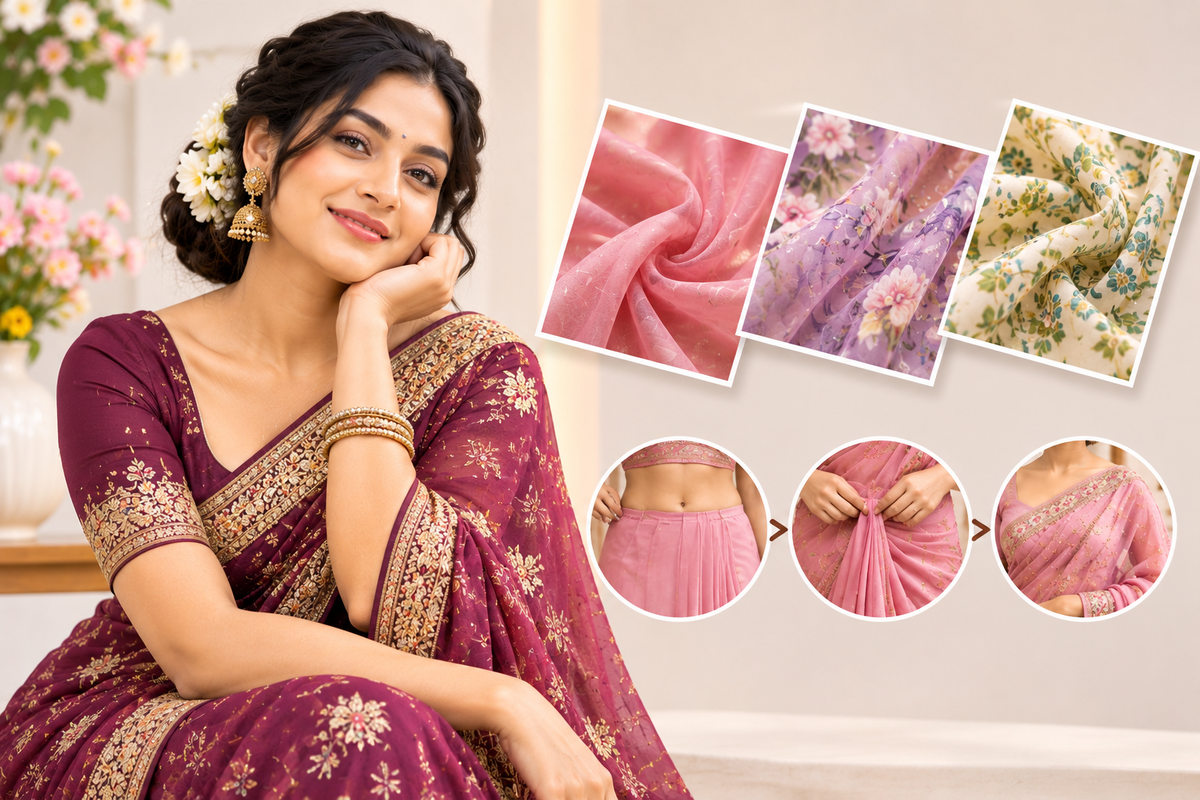
5. Basic Steps for Wearing a Saree
Here is a simple overview of the traditional draping process:
Step 1: Wear your blouse and petticoat.
Choose a comfortable petticoat with a secure waistband.
Step 2: Tuck the saree into the petticoat.
Start around your waist and wrap the fabric around your body.
Step 3: Create the front pleats.
Fold the fabric into neat, evenly sized pleats.
Step 4: Secure the pleats.
Use a safety pin carefully to keep them in place.
Step 5: Drape the pallu.
Bring the remaining fabric over your shoulder and adjust it to your preferred style.
Step 6: Check your final look.
Make sure the saree is secure and comfortable before moving around.
6. Essential Accessories for Beginners
A few basic accessories can make wearing a saree easier.
Consider having:
-
A well-fitting blouse.
-
A matching petticoat.
-
Safety pins.
-
Comfortable footwear.
-
A small clutch.
-
Simple earrings.
Avoid using too many accessories while learning to manage the drape.
7. Practice Before Your Special Occasion
If you are planning to wear a saree to a wedding or party, practice at home first.
Try draping the saree a few times and experiment with different pallu styles.
You can also watch beginner-friendly draping tutorials.
Practice will help you feel more comfortable and confident.
Discover Beautiful Sarees at SareeGhorCharlotte
Starting your saree journey is a wonderful way to explore traditional South Asian fashion.
Discover saree styles at SareeGhorCharlotte and find a design that matches your comfort level and personal taste.
Your first saree can become the beginning of a beautiful fashion tradition.
Frequently Asked Questions
1. Which saree is easiest for beginners?
Lightweight georgette and some cotton sarees are popular beginner-friendly options.
2. Can beginners wear chiffon sarees?
Yes. Chiffon sarees are lightweight, but they may require extra care when creating pleats.
3. Do I need a special petticoat?
A well-fitting saree petticoat is generally used to support traditional saree draping.
4. How long does it take to learn saree draping?
It depends on the individual. With regular practice, many beginners become more comfortable after a few attempts.